
Start With The First Wash
The first wash matters more than most people think. If a garment has been heat pressed or screen printed, let it rest for 24 hours before washing unless your supplier says otherwise. That gives the print time to settle properly into the fabric, which helps reduce early lifting or cracking.
Turn the garment inside out before it goes into the machine. This protects the printed surface from rubbing against zips, buttons and other clothing. Use cold or lukewarm water and a gentle cycle. Hot water can soften some print finishes and make colours fade faster, especially on darker shirts used for office staff, schools or events.
In Durban North and along the coast, humidity can make washing and drying feel slower, so it is tempting to stack wet clothes up while waiting. It is better to wash smaller loads and dry them properly rather than leave damp items sitting too long. That helps with odour too.
Choose Detergents That Are Kind To Ink
Strong bleach and harsh stain removers can strip colour from fabric and also affect printed areas. A mild detergent is usually enough for most corporate wear, golf shirts and promo items. If a stain needs extra attention, treat the spot lightly and test it on an inside seam first if possible.
- Avoid chlorine bleach on printed logos and coloured garments.
- Use only the amount of detergent needed for the load.
- Do not pour cleaning products directly onto artwork.
- Rinse well so residue does not sit in the fibres.
Powder detergent that does not dissolve fully can leave marks on darker garments. Liquid detergent often works better for everyday branded clothing, especially on poly cotton shirts and caps. A gentle approach keeps the print looking clean and the garment looking presentable for longer, which matters when teams wear the same items week after week.
Heat Is The Enemy Of Fresh Prints
Too much heat is one of the fastest ways to damage printed clothing. Tumble dryers can be useful, but only on a low heat setting where the care label allows it. High heat can shrink the fabric, weaken adhesive on transfer prints and make artwork feel stiff or cracked.
If you iron a printed garment, never press directly on the design. Turn it inside out and use a low setting. If needed, place a clean cloth over the outside of the garment before ironing. This is especially important for branded golf shirts used in schools, clubs and business settings where the logo must stay sharp and readable.
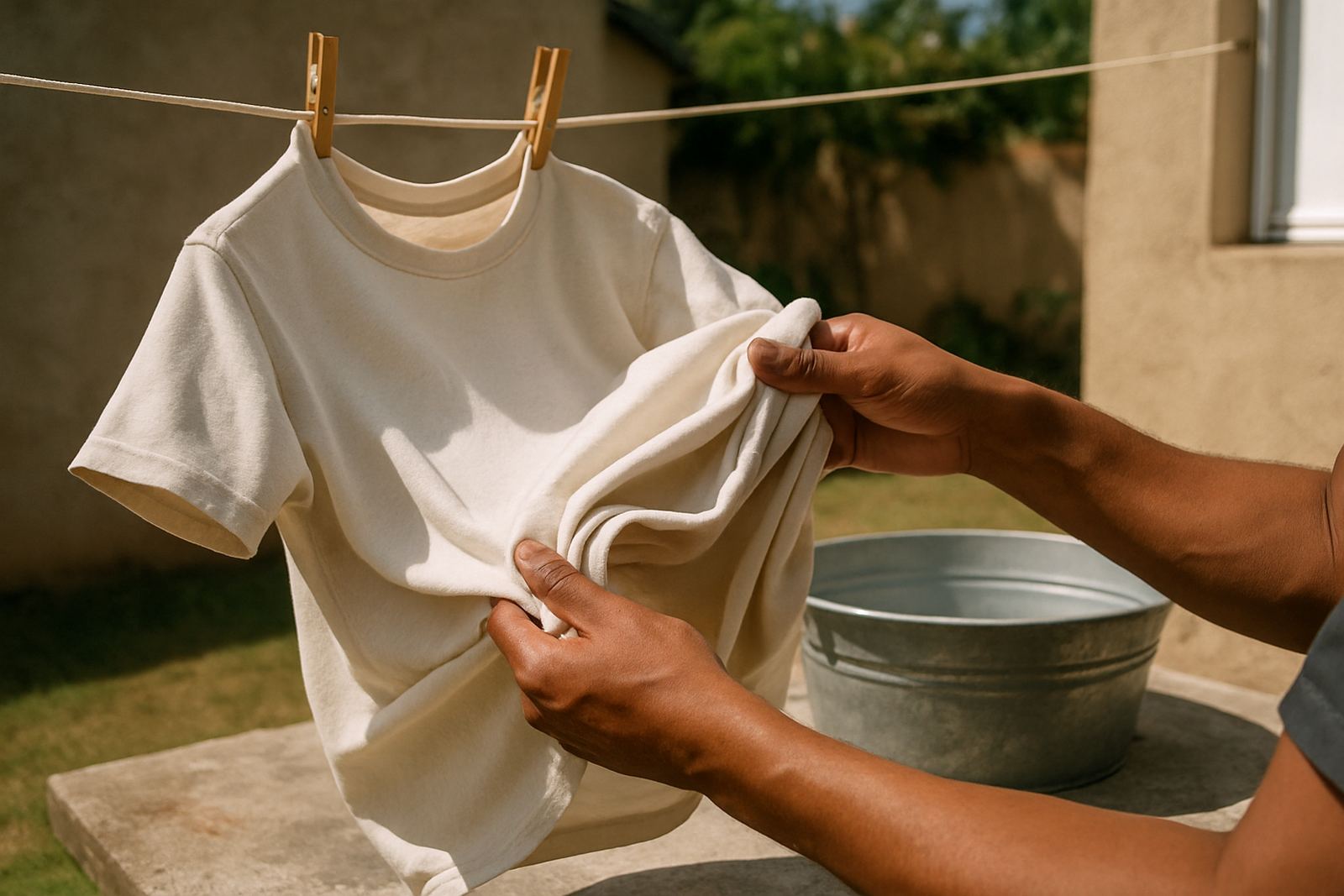
When garments are line dried, hang them in the shade rather than under harsh midday sun. South African sun can be unforgiving, and long exposure can fade both fabric and print over time. That is true for items worn in Westville office parks as much as for sportswear moving between Ballito and the Durban beachfront.
How To Keep Caps And Uniform Packs In Shape
Caps and uniform packs need a slightly different routine because of their shape and the way they are worn. Caps should be spot cleaned where possible rather than thrown around in a machine with heavy items. If the cap has a structured front panel, avoid twisting or folding it when wet.
Uniform packs work best when the whole set is treated as one job. Keep shirts, caps and any printed promo items separate from rough fabrics like denim or workwear with Velcro. Even a small snag can damage a logo or pull threads on embroidered items. That is one reason businesses in Umhlanga and Pinetown often ask for labelled packs, it makes staff issue and laundry much easier.
- Store caps on a shelf or hook, not crushed in a bag.
- Separate light and dark garments before washing.
- Keep promo items with printed branding out of direct sun.
- Check seams and hems before washing bulk sets.
Watch Out For Coastal Conditions And Daily Wear
In coastal areas like Durban North, La Lucia and Umhlanga, salt air and moisture can affect garments that are left damp in cupboards or vehicles. If shirts stay slightly wet after washing, the print can take on a dull look and the garment may start to smell musty. Let items dry fully before folding or packing them away.
For businesses that issue uniforms daily, rotation helps. If the same shirt is worn and washed every day, it will show wear much sooner than a shirt that gets a day or two to recover. Having a spare set also helps when the weather turns or when a rush order needs to be used right away. A little planning saves a lot of replacement cost, and less stress too.
Printed workwear used on-site, at events or in school settings should be checked now and then for loose corners, faded areas or small cracks. Catching these early means you can replace one item instead of the whole set.
What To Do When A Print Looks Tired
If a printed garment starts to look dull, do not scrub it hard or use aggressive cleaning methods. Start with a gentle wash and check whether residue, over-ironing or incorrect drying caused the issue. Sometimes a print only needs better care. Other times the garment has reached the end of its life cycle and needs replacing.
For bulk orders, it helps to keep sample runs or one reference item in good condition so you can compare it with older stock. That makes re-ordering easier and helps keep branding consistent across teams in Hillcrest, Mount Edgecombe and beyond. If artwork needs updating, clean files and checked colours make the next run far more accurate.
Good care does not need special equipment. It just needs a routine that suits the garment, the print method and the pace of the business. That is often the difference between a shirt that lasts a season and one that still looks decent after many washes.