Start With The Garment, Not The Logo
The best result usually starts with the fabric in your hand. A thick golf shirt, a cap with structure, or a heavy work shirt will take branding differently from a light tee or a soft performance top. If the item will be washed often, worn outdoors, or seen up close at reception, the method matters as much as the artwork.
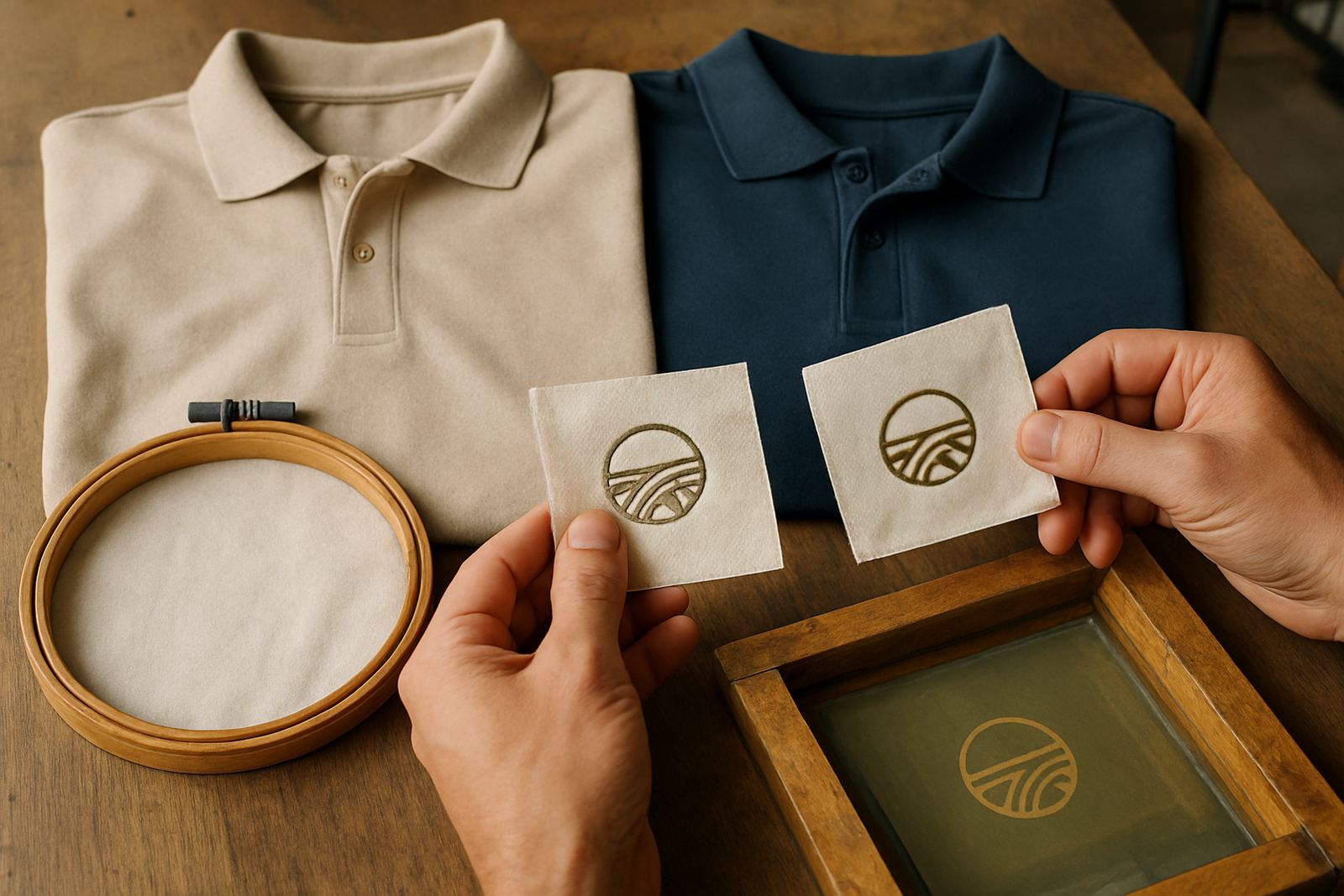
Embroidery gives a raised stitched finish that sits well on polos, jackets, caps and corporate uniforms. Print works better when you need colour detail, larger artwork or a smoother feel on lighter garments. In Durban and along the coast, moisture and salt in the air can also influence what lasts best. A stitched logo on a golf shirt used daily by staff in Umhlanga or Ballito often holds up well through repeated washing, while print may suit event shirts, promo tees and short run campaigns.
For a simple logo on a golf shirt, embroidery is often the first choice. For a colourful campaign graphic, print is usually the more practical route. The garment and the job should lead the decision, not habit.
When Embroidery Makes The Strongest Case
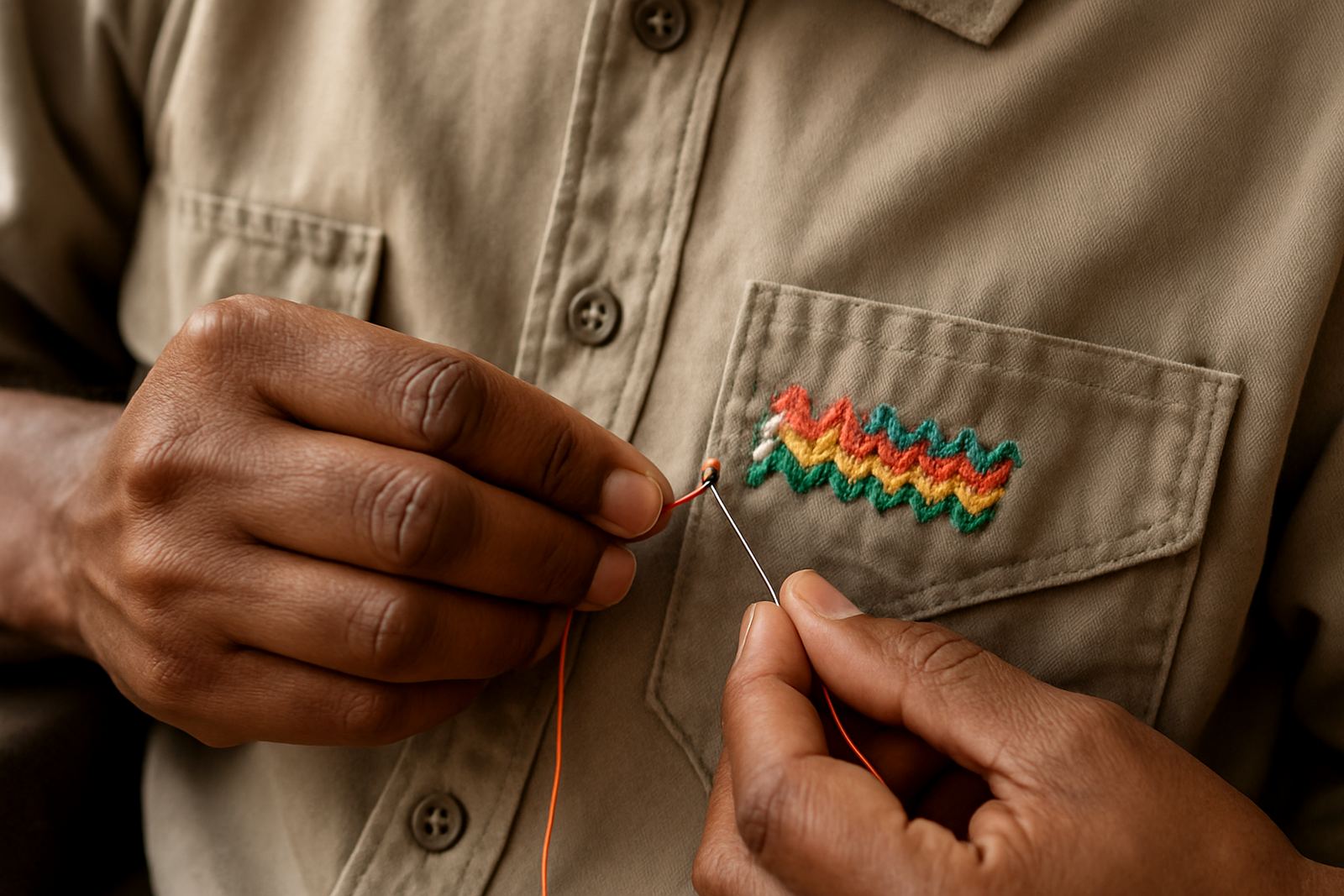
Embroidery works well when you want a premium, tidy finish that keeps its shape. It is a solid option for corporate wear, school wear, golf shirts, caps and jackets. Because the thread is stitched into the garment, it stands up well to regular wear, provided the fabric is suitable and the logo is not too fine.
There are limits. Very small text, thin lines and complex shading can lose clarity in stitch form. A detailed crest may need a simplified version for embroidery. That is where in-house digitising helps, because the artwork can be prepared properly for thread, stitch count and garment size before production starts.
- Best for polos, caps, jackets and heavier uniforms
- Good for front chest logos, sleeve marks and back neck branding
- Strong for ongoing staff wear and club kit
- Works well where a smart, long lasting finish is needed
If you are branding uniforms for a hotel team in La Lucia or a school sports department in Pinetown, embroidery often gives the right balance of appearance and durability.
When Print Gives You More Room To Work
Printing is the better fit when the design needs more colour, more surface area or a softer feel. Screen printing, heat press printing and other print methods can suit promotional tees, event wear, campaign clothing and larger graphics on cotton or blended fabric. If you need bold wording, multiple colours or a one off run, print can be more cost effective than stitch.
Print is also useful when the garment is light and you do not want the added texture of embroidery. A branded staff shirt for a summer promotion in Westville, for example, may be more comfortable with print if the team will be indoors and outdoors through the day. For sports days, charity runs and school events, print allows names, numbers and sponsor marks to sit cleanly across the chest or back.
- Better for large logos and full colour artwork
- Useful for event shirts, promo items and short runs
- Comfortable on lighter garments and tees
- Often more suitable when the budget needs to stretch across many units
Print does need the right care. Some garments hold it well, others need more attention when washed or ironed. That is why the garment type and the use case should be checked before a job is approved.
Matching The Method To Common South African Orders
In practice, most orders fall into a few clear patterns. Golf shirts for a sales team, caps for a fundraiser, and uniforms for school staff each call for a different approach. The same logo may even be used in both embroidery and print, depending on where it sits and how large it needs to be.
For example, a business in Mount Edgecombe may want embroidered golf shirts for front office staff and printed tees for a promotional roadshow. A club in Hillcrest may choose stitched caps for the committee and printed shirts for a tournament. That is normal and often the most practical route. You do not need one method for every item.
It also helps to think about the wear pattern. If the garment will be ironed often, carried in a kit bag, or exposed to sun during outdoor work, embroidery may keep a cleaner appearance over time. If the item is being handed out to a large group at once, print can keep costs controlled while still looking professional.
When the brief is clear from the start, the finished order looks more consistent and the rework is less likely. That saves time on sample runs and reduces delays before dispatch.
What To Ask Before You Place The Order
A good branding decision comes down to a few practical questions. Ask how the garment will be worn, how often it will be washed, what kind of finish you want, and whether the artwork needs simplification. If there are deadlines, be upfront. A rush order with a 24 hour turnaround is sometimes possible, but only if the artwork, stock and production slot all line up.
Useful questions include:
- Will this item be worn daily or only for events?
- Does the logo need a stitched finish or a flat printed finish?
- Is the artwork simple enough for embroidery, or should it be printed?
- How many units are needed for the order?
- Will the branding be on polos, caps, jackets or promo items?
For clients across eThekwini, from Durban North through Umhlanga and Ballito, the most efficient jobs are usually the ones where artwork is checked early and the garment choice is settled before production starts. That is especially important on bulk orders where one small change can affect the full run.
A Local Example From A Coastal Client Brief
Take a coastal business that needs uniforms for reception, site visits and events. The reception team may be best served by embroidered golf shirts because they look formal, hold their shape and present well to visitors. The events team may need printed tees for bigger graphics and sponsor messaging. Caps might be stitched for sun protection and a tidy appearance, while promo bags or give away items can be printed for wider brand reach.
That mix is often the most sensible answer. Durban weather can move from humid to hot very quickly, and staff may move between air conditioned offices and outdoor areas in the same day. A single method does not always suit every use. The right combination keeps the brand consistent without forcing one finish onto every item.
For schools and clubs too, the same logic applies. A blazer pocket mark, sports cap and supporter shirt may all need different treatment. Choosing embroidery or print is less about preference and more about what the garment has to do.
A Simple Rule For Faster, Better Branding
If you want a clean, long lasting finish on polos, caps and heavier uniforms, embroidery is usually the safer choice. If you need colour, coverage and flexibility on tees, event wear or promo items, print is often the better option. Many good orders use both.
At EMB Designs in Durban North, the process is handled with in-house digitising, artwork checks and production planning so the method suits the garment from the start. That matters whether the order is for one branch in La Lucia or a bulk run across Westville, Pinetown and Ballito.
The simplest rule is this: choose the finish that fits the garment and the job, not just the logo. That gives you branding that looks right on day one and still looks decent after the tenth wash.