What construction crews usually need branded
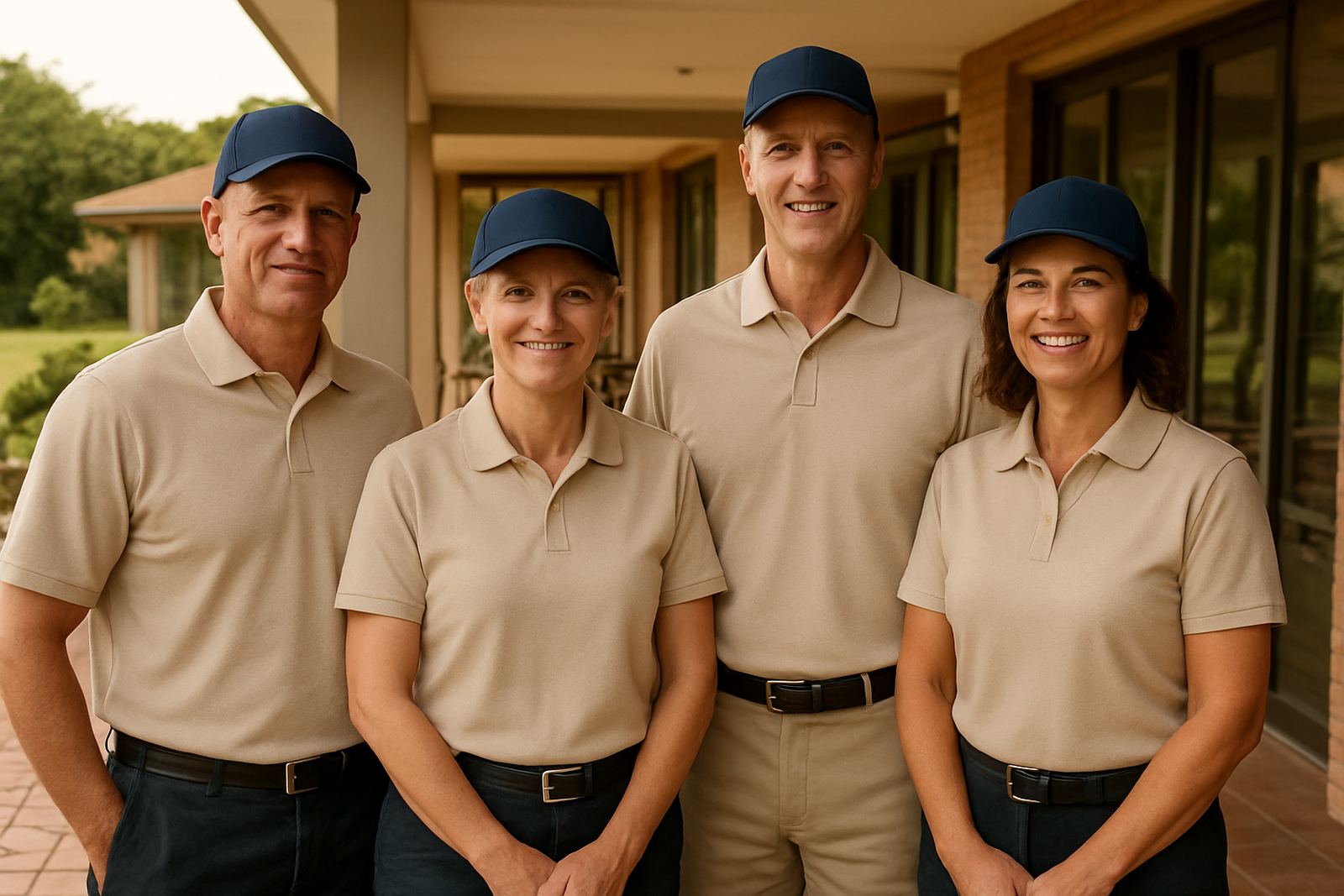
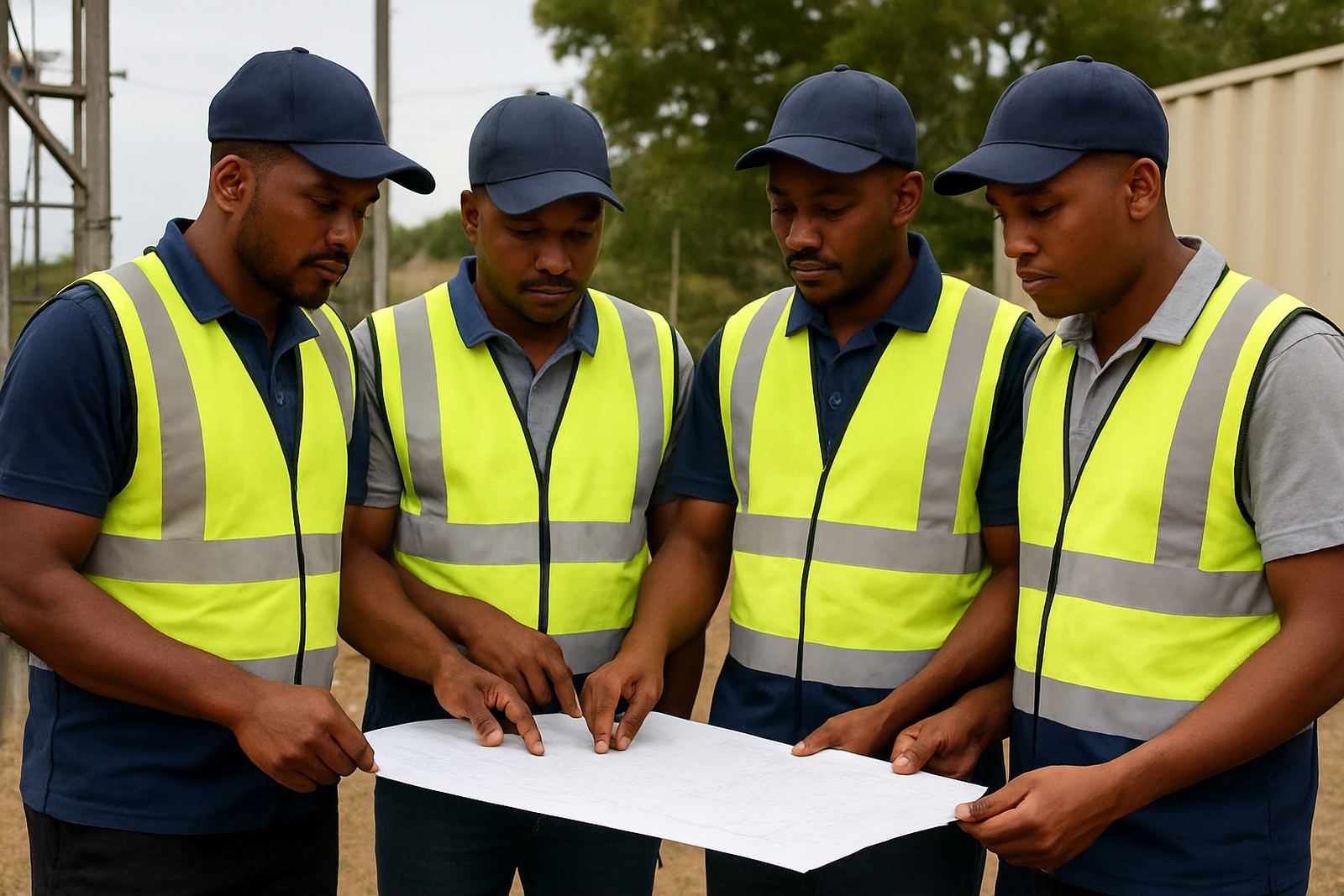
Most site teams come to us when they need a practical mix of visibility, durability and proper identification. A standard order often starts with work shirts or golf shirts for supervisors, heavier shirts for field staff, and branded caps for sun protection. For sites where teams move between trades, we also supply high-vis items, rain-ready layers and uniform packs so everyone looks consistent from the first site meeting to handover.
For construction work in Durban and the coast, fabric choice matters. Coastal humidity can make lighter garments feel sticky, while inland dust and sun break down cheap prints quickly. We help clients choose garments that can handle repeated washing, still look tidy after a few weeks, and keep the logo readable on site. If the team is working under municipal pressure or on private developments with strict access control, clear branding also makes it easier for security and clients to identify crews fast.
- Embroidered golf shirts for supervisors, project managers and office-to-site staff
- Printed tees or work shirts for general crews and subcontractors
- Caps, bucket hats or beanies for sun and weather protection
- High-visibility vests and shirts for roadside or low-light work
- Uniform packs for new starters, smaller teams or project rollouts
Choosing the right branding method for site wear
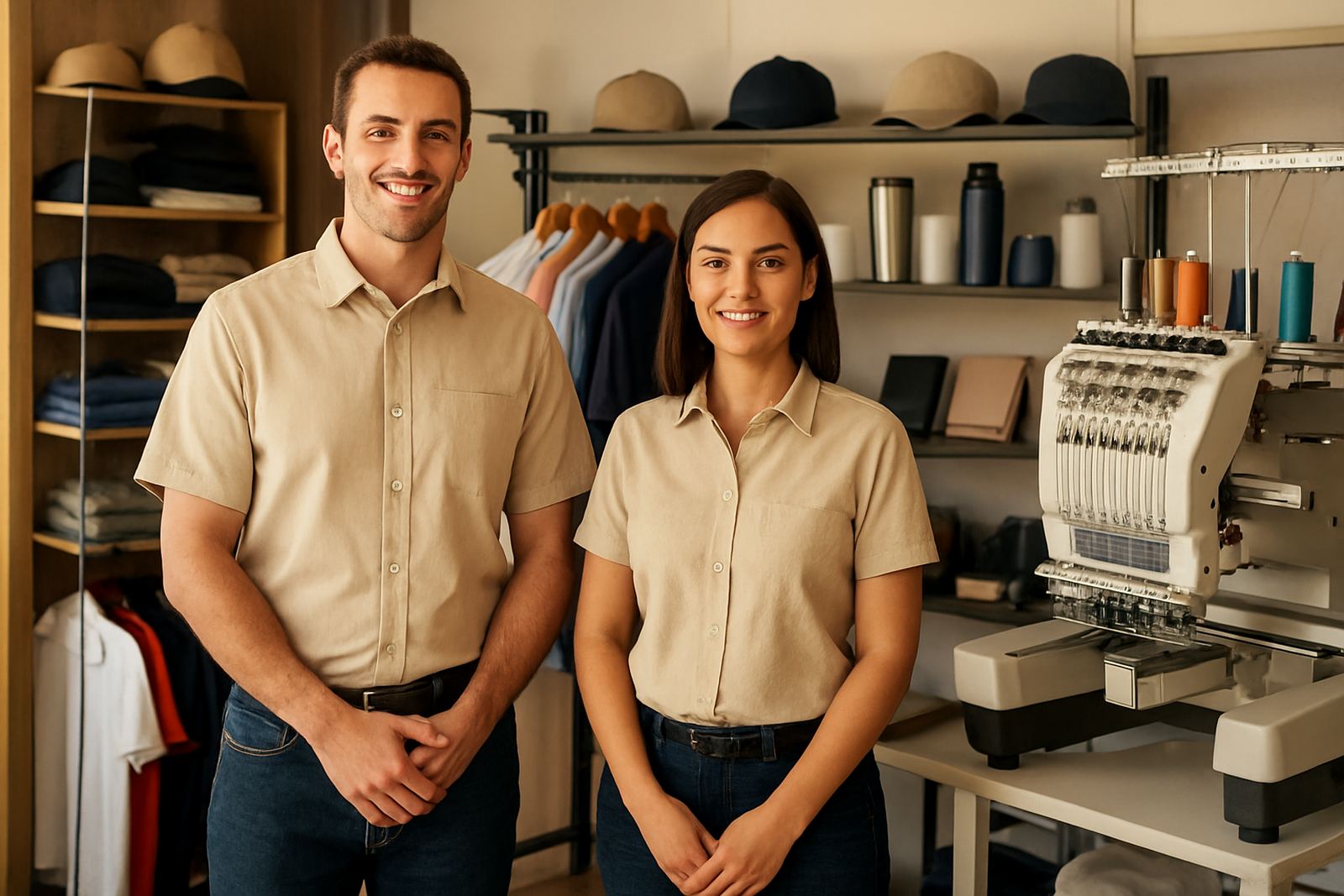
Different jobs call for different branding. Embroidery is the go-to for shirts, caps and heavier garments because it lasts well and gives a neat finish. Screen printing suits larger quantities and simple logo artwork, especially when you want a sharp result on cotton or polycotton. Heat press printing works well for names, numbers and short-run items where speed matters. We do in-house digitising, so your logo is prepared for embroidery properly before stitching starts.
If your team is handling concrete, brick, steel or wet ground, the main goal is wear resistance. A stitched logo on the chest or cap usually outlasts a print in rough conditions, although printed backs and sleeves can be useful for safety wording, project names or subcontractor identification. For rush jobs, we can often turn around smaller runs in 24 hours, depending on stock and artwork approval. That said, the best results come when artwork is clear from the start and not copied from a blurry photo off a phone.
- Use embroidery for a more durable front logo on shirts and caps
- Use screen printing for larger batches and clean single-colour logos
- Use heat press for names, numbers and short lead-time runs
- Ask for an artwork check before production to avoid delays
How to plan a site order without wasting money
Planning a workwear order is easier when you group people by role rather than ordering one shirt type for everyone. Supervisors, operators, admin staff and general labour teams often need different clothing weights and branding placement. A good starting point is to count each role, then add 10 to 15 percent for new starters, damaged garments or extra hands on peak days. That small buffer often saves a second rush order later.
It also helps to think about colour early. High-vis yellow or orange is common for traffic areas and road-adjacent work, while navy, grey and black are often chosen for general site wear because they hide dust better. If the crew works near public areas, choose garments that show the company name clearly from a distance. Keep the logo simple if possible, because fine detail can disappear on textured fabric. We can do sample runs before bulk orders, which is useful when you want to check sizing, logo placement and colour against existing uniforms.
- List each role and count the number of people per role
- Decide where the logo should sit: chest, back, sleeve or cap front
- Allow extra units for replacements and new staff
- Test one sample before committing to a bulk run
Common mistakes on construction workwear orders
One of the biggest mistakes is choosing the wrong garment weight for the job. A light promotional tee may work for a short event, but it can wear out fast on a busy site. Another mistake is using too much detail in a logo. Small text, thin lines and crowded badges can look messy once embroidered, especially on textured fabric. It is better to simplify the artwork so it reads clearly from a few metres away.
Another issue is leaving size planning too late. Crews rarely wear one standard size across the whole team, and you do not want half the order sitting unused because the fit is off. We also see orders placed without checking the site colour rules or safety needs. Some projects require high-vis elements, while others need darker garments that cope better with dust and grease. Finally, do not forget dispatch timing. If a project starts on Monday and the order is only approved on Friday afternoon, even the best turnaround can become tight. We work with proper packing and delivery from our Durban North base, but the approval step still matters a lot.
- Do not pick a garment that is too light for daily site use
- Do not overcrowd the logo with tiny text
- Do not guess sizes for the full crew without checking
- Do not leave approval to the last day before site start
Budget ranges for crew branding in Rand
Budgets vary depending on garment type, branding method and quantity. For smaller teams, a basic branded golf shirt order can start from around R140 to R220 per item for embroidery, depending on fabric and logo size. Printed tees or work shirts are often lower per unit on larger quantities, usually around R90 to R180 each. Caps with embroidery are commonly in the R65 to R140 range, while high-vis items and heavier garments can sit higher because the base garment costs more.
For a crew of 15 to 30 people, a practical starter budget for mixed workwear can fall between R3 500 and R12 000. Larger site rollouts, especially when they include multiple garment types, names and quick turnaround, can go well beyond that. If you need packing by size, delivery to site and repeat orders through the project, we can structure the run in phases so you do not tie up the full budget at once. That is useful for contractors working across eThekwini where teams move between Umhlanga, Westville, Pinetown and Ballito.
We are also used to helping clients balance finish and cost. A simpler logo, one embroidery position and a standard garment usually keeps the order affordable. If you need names, back prints, extra items and rush production, expect the price to move up. The best approach is to tell us the crew size, the job type and the deadline, then we can quote around the actual site needs rather than guesswork.
What to send us for a clean quote
When you send an enquiry through the contact page, include the number of people, the garments you want, your logo file if you have one, and the date the crew needs to be dressed. If you are unsure about artwork, send the closest version you have and we will check what can be used for embroidery or print. That saves back and forth and helps us advise on whether you need digitising, print setup or both.
It also helps to mention the site location and the working conditions. A crew based in Mount Edgecombe may need different garment weights from a team exposed to open sun in Pinetown or dust on a build in Hillcrest. If you need a smaller urgent run for a tender meeting, site induction or inspection, say so up front. With good information at the start, we can keep the order practical and on time.
- Send the crew count and size mix
- Say whether you want embroidery, print or both
- Include the deadline and delivery area
- Share any safety or colour requirements for the site