A practical uniform brief for a busy Berea practice
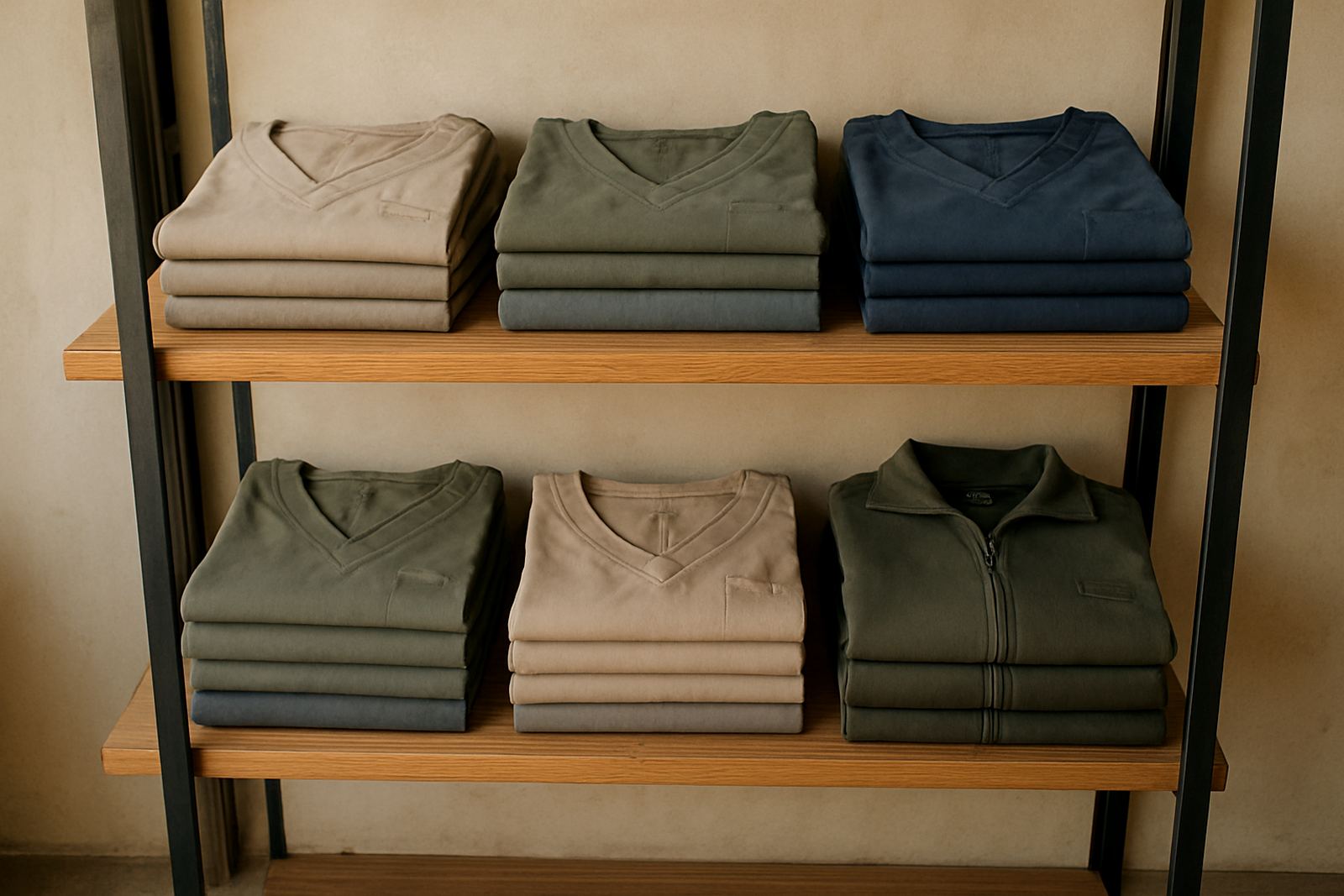
The client was a healthcare team based in Berea, serving patients through long shifts, early arrivals and steady front-of-house traffic. They needed clothing that looked clean and organised, held up to regular washing and still felt comfortable in Durban humidity. The order covered embroidered scrub tops for clinical staff and reception jackets for the front team, with a consistent look across sizes and departments.
The brief was to keep branding neat and readable, without making the garments feel heavy or stiff. They wanted a simple, professional finish that would work in consultation rooms, at reception and during admin tasks. Because the team needed the order quickly, we planned the work around a short production window and kept the approvals process tight.
What we supplied and the key specs
We handled the logo preparation, embroidery production, and packing for issue by team member. The garments were selected for everyday wear, with a focus on easy movement, repeat washing and a presentable look at close range. The embroidery was placed for visibility without interfering with pockets, zips or name badges.
- Embroidered scrub tops for clinical staff
- Reception jackets for client-facing team members
- Logo digitising completed in-house before production
- Embroidery positioned for a balanced, professional finish
- Sizes grouped and sorted for easier distribution
- Packed for bulk handover and delivery
For a medical environment, small details matter. Thread choice, placement and stitch density all affect how the garment wears over time. We kept the logo crisp and readable, while making sure the fabric was not pulled or puckered during stitching.
Artwork checks and digitising before the first stitch
Before anything went into production, Jason Naidoo reviewed the artwork and converted the logo into a format suitable for embroidery. That step matters because a logo that looks fine on paper can lose detail once it is stitched into fabric. Fine lines, small text and thin borders all need adjusting so the finished result stays legible.
We checked stitch direction, thread count and the scale of the logo against the garment size. Where needed, we simplified small details to avoid a cluttered look. The client received a clear proof for approval, and once signed off we moved straight into production without delays. That saved time and reduced the risk of rework.
- Artwork checked for line weight and small text
- Logo digitised for embroidery, not just copied across
- Test placement reviewed against garment panels
- Approval completed before production started
Production in Durban North for a short turnaround
The work was produced at our Durban North base, which helps when a client needs a quick local turnaround. The order was managed by Nokuthula Dlamini and the production team, with Priya Govender overseeing the print room side of the workflow where needed and Morne van Zyl coordinating dispatch. For this job, the embroidery queue was prioritised so the garments could move through stitching, quality check and packing within the agreed window.
The order was completed over 1 week from final approval to ready-for-collection, with an optional 24-hour turnaround available on request if the client had needed it sooner. That option is useful for practices dealing with staffing changes, event weeks or late uniform decisions. In Durban weather, it also helps to have garments out quickly before the next heat wave or load-shedding disruption adds pressure to the day.
We kept communication simple: confirm the quantities, approve the artwork, then stitch and pack. No fuss. The scrub tops and jackets were labelled, packed and sent out in one batch, which made distribution at the practice easier.
Why the clothing had to work in a medical setting
Healthcare clothing gets tested in real conditions. It needs to cope with constant movement, frequent washing, occasional disinfectant contact and long hours at reception or in treatment areas. A uniform that looks good on day one but fades or loses shape quickly is no use to a busy team.
For this project, we focused on a finish that would stay neat after repeated use. The embroidery was chosen over large print coverage for the main branding because it gives a cleaner look on scrubs and jackets, especially where staff need a more formal appearance. The result was a professional uniform set that suited both patient-facing and operational roles.
- Suitable for daily wear in a clinical environment
- Easy to identify staff members by department
- Professional look for reception and consultation areas
- Durable branding for repeated laundering
What changed after delivery
The client received a consistent set of uniforms that made the team look more coordinated at once. The embroidered branding gave the practice a cleaner front-of-house presence and made it easier for patients to identify staff members. Because the garments were packed by size and type, issue to the team was straightforward and there was less sorting to do on site.
What stood out most was the balance between speed and finish. The practice did not have to settle for rushed work that looked rushed. They got a neat result within a practical timeframe, and the order reflected the kind of routine support that matters to healthcare teams. There was also less back-and-forth after approval because the first sample direction was right for the brief.
What we would do again on a similar order
If we were repeating this type of order for another Berea or eThekwini practice, we would follow the same approach: keep the artwork review tight, confirm garment sizes early and plan the embroidery sequence around the delivery deadline. For healthcare uniforms, the best results usually come from clear branding, sensible placement and a production plan that leaves room for a final check before packing.
We would also keep the option open for sample runs where a practice wants to see thread colour and logo scale on fabric before committing to the full batch. That extra step can be useful for larger teams or where several departments share one uniform style. In this case, the process worked well because the brief was clear, the sign-off was quick, and the final garments matched what the team needed from the start.
Key facts
| Project | Berea Clinic Scrubs |
|---|---|
| Client type | Healthcare team in Berea, Durban |
| Items supplied | Embroidered scrub tops and reception jackets |
| Services used | Logo digitising, embroidery, artwork checks, packing and delivery |
| Turnaround | 1 week from final approval, with 24-hour turnaround available |
| Base | Durban North |