Why sizing errors cost more than the shirt itself
When a golf shirt, jacket or cap arrives in the wrong size, the real cost is not only the garment. You pay for replacement stock, extra branding, sorting time and sometimes urgent delivery to make up for a launch, event or school function. In Durban North and surrounding areas, many orders are placed for teams that must look consistent from day one, so one bad size call can throw the whole order off.
We see this most often on bulk orders where the buyer chooses sizes from memory rather than measurements. A medium in one style may fit like a large in another, especially with different cuts, fabric weights and shrinkage after washing. Add humidity, active work and long hours on site, and comfort starts to matter just as much as appearance.
The most common sizing mistakes we see in Durban orders
Most reorders start with the same few errors. A team member says they are a medium, but the shirt is fitted and needs a large. The buyer orders one size for everyone because it is easier. Or a school or club forgets to factor in youth sizes, ladies cuts and larger adult sizes in the same pack.
- Choosing sizes by guesswork instead of measuring the wearer
- Using old size labels from worn garments as the only guide
- Mixing regular cut and tapered cut items without checking fit
- Ordering too few larger sizes for staff who prefer extra room
- Forgetting shrinkage on cotton blends after washing
Another common issue is not allowing for different body shapes. Two people can both wear a large, but one may need a longer length while the other needs a wider chest. That matters on branded workwear where the logo must sit correctly and not stretch across the chest or ride up at the waist.
How to measure properly before you place an order
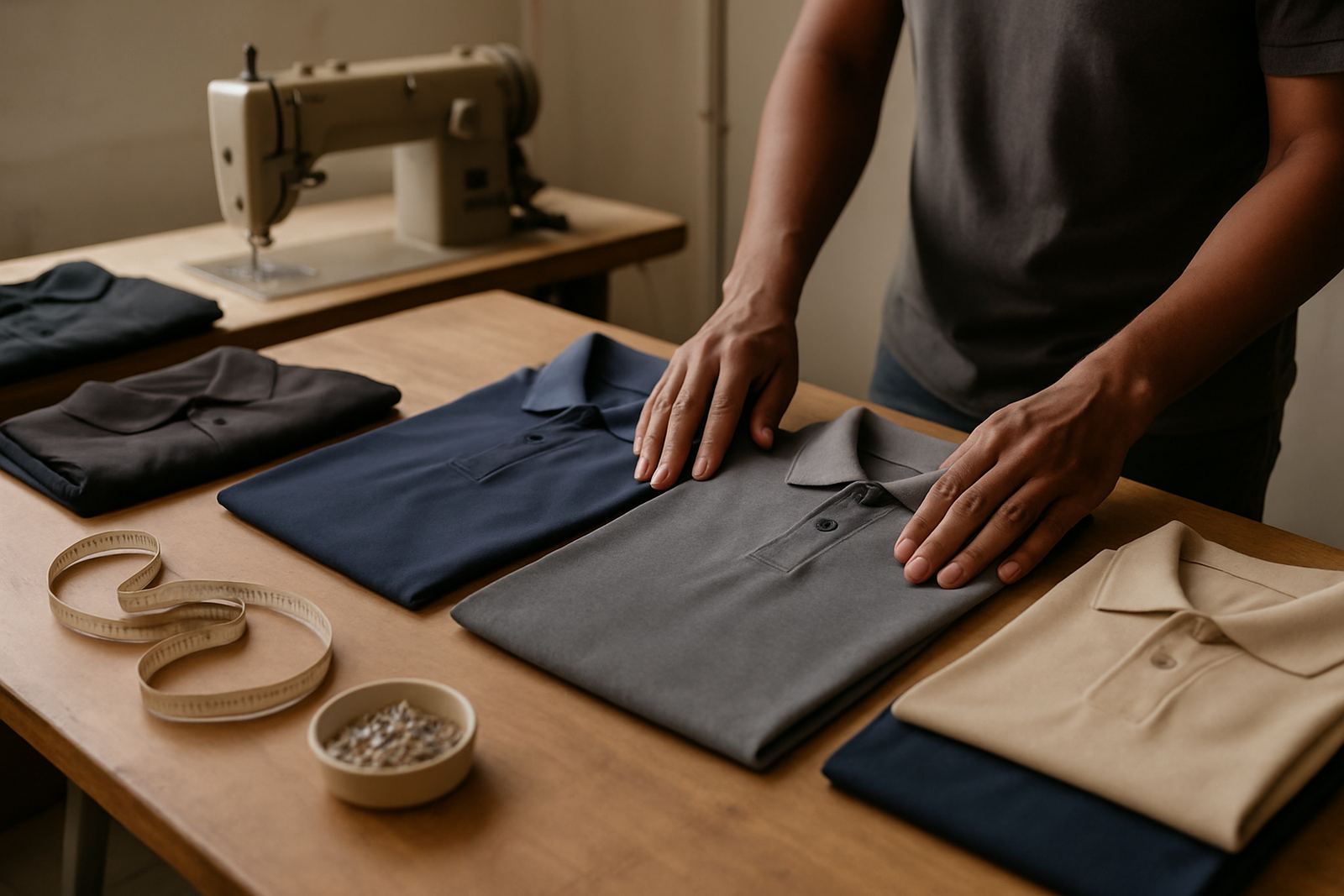
The safest way to avoid sizing mistakes is to measure the body or compare against a garment that already fits well. For most apparel, chest width, length and sleeve length give a far better result than guessing from a label. If you are ordering uniforms for a business in Umhlanga or Pinetown, a short fitting session can save a lot of back and forth later.
- Measure a shirt that already fits well, laying it flat on a table
- Check chest width, body length and sleeve length
- Confirm whether the fit should be regular, relaxed or tailored
- Separate ladies, men’s and youth sizing before counting quantities
- Keep a simple size list for each department, team or class
For golf shirts and corporate wear, it also helps to think about how the garments will be used. Office staff may want a neater fit, while warehouse or site teams usually need more ease for movement. If the order is for a coastal workplace in Ballito or La Lucia, breathable fabric and a comfortable cut can make a big difference during warmer months.
Why sample runs beat assumptions every time
A sample run is one of the most practical ways to avoid expensive mistakes. It lets you check the fit, the logo size, the placement of embroidery or print, and how the fabric behaves after handling. If there is a problem, you can adjust before the full bulk order is done.
This is especially useful when the order includes caps, uniforms packs and mixed apparel. A cap may fit well on paper but feel too shallow in real use, and a shirt can look correct until someone lifts an arm or sits at a counter for the day. A sample gives you real feedback from the people who will actually wear it.
- Test one size in each style before committing to bulk quantities
- Check fit after a quick wash if the garment will be laundered often
- Confirm logo position on all sizes, including larger garments
- Ask wearers to move, bend and reach so the fit is practical
In a school order for Westville, for example, a sample run can show if the youth sizes are too narrow for active learners or if the adult polos need a longer body length for teachers and support staff. That one step often avoids a costly second order.
How branding choices affect fit and comfort
Embroidery, screen printing and heat press printing can all affect how a garment feels once branded. Heavy embroidery on a light shirt may pull on the fabric, while thick print layers can feel stiff if the design is large. The placement matters too. A logo too close to the side seam or too high on the chest can make the garment look awkward even if the size is correct.
That is why artwork checks matter before production begins. It is not only about the artwork being neat, but about whether the branding suits the garment size. A small logo that works on a medium may look lost on a 5XL, while a large logo on a small shirt can overwhelm the front panel.
For promotional items, the same thinking applies. Caps, aprons, bags and safety wear each have their own fit rules and surface limitations. If the sizing is not checked early, the branding job can still be technically correct but practically uncomfortable.
Ordering for teams across eThekwini without the reprint drama
Businesses in Durban North, Umhlanga, Westville, Pinetown, Ballito, La Lucia, Mount Edgecombe and Hillcrest often need uniform packs for new staff, events or seasonal campaigns. The best approach is to set a standard size record and update it each time there is a new intake. That way the next order is based on actual wear, not memory.
It also helps to keep a little extra stock in the most common sizes, especially when you need rush orders. Load-shedding, transport delays and last-minute event changes can already create pressure, so the size list should not be another problem. If a team changes over time, review the numbers before every bulk order and allow for a few larger sizes than you think you need.
At EMB Designs, sizing is handled as part of the production process, not as an afterthought. With in-house digitising, embroidery, print checks and packing handled locally, orders can be checked properly before they leave the Durban North base. That practical step is what keeps reorders down and keeps the final delivery usable from day one.
A simple sizing checklist before you approve the order
Before you sign off on any branded apparel order, use a short checklist. It takes only a few minutes, but it can save days of delay and wasted stock.
- Confirm the wearer list and count each size properly
- Separate men’s, ladies and youth garments where needed
- Check measurements against a garment that already fits well
- Approve a sample if the order is for a new style or new team
- Review logo placement on the exact garment sizes being ordered
- Allow for shrinkage, fabric differences and active use
A careful sizing process is not complicated. It just needs a bit of planning before the order is placed. That is the easiest way to keep your uniforms looking right, fitting well and arriving on time.